
Bed Bug Treatment in Jacksonville, FL
Get a good night's sleep again with a careful inspection, a plan that fits your home, and follow-up visits to confirm the bugs are gone.
Your call connects you with an independent local pest control provider.
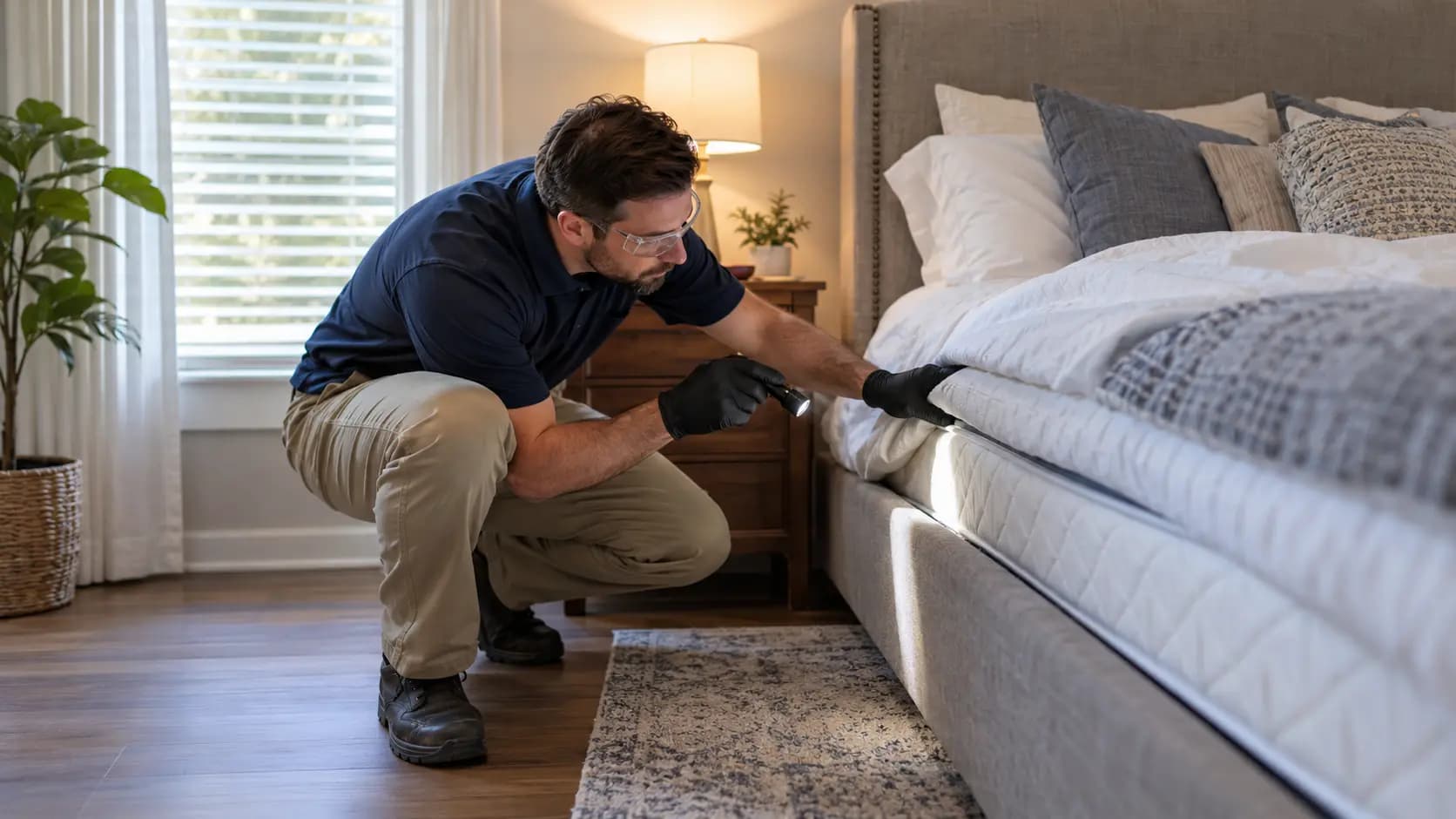
Finding bed bugs is stressful, and it has nothing to do with how clean your home is. These small, flat insects ride in on luggage, used furniture, and even clothing, then hide in mattress seams and bed frames and come out at night to feed.
Bed bug treatment in Jacksonville begins with a close inspection to confirm what you have and how far it has spread. A local pest control pro walks you through a simple preparation checklist, treats every room where bugs are found, and comes back for follow-up visits. Eggs can survive one treatment, so checking again is how you know the problem is truly over.
Updated
Why Bed Bugs Show Up in Jacksonville Homes
Bed bugs don't care about the weather. They live indoors, close to people, so they're as active in January as in July. What spreads them is movement, and Jacksonville has plenty: an airport, cruise traffic, military moves, and beach visitors.
Apartments and condos are a common source, since bed bugs can travel between units along pipes, wiring, and shared walls. Used furniture is another. A mattress or couch picked up from the curb or an online listing can bring an infestation home in one trip. Bed bugs aren't known to spread disease, but their bites itch and the worry steals sleep.
Signs You Have Bed Bugs
Itchy bites in a line or cluster
Red welts in rows of three or four, often noticed in the morning. Some people don't react at all.
Rusty or dark spots on sheets
Blood smears from crushed bugs, or tiny black dots of droppings on bedding and the mattress.
Shed skins
Pale, empty shells left behind as bed bugs grow, often tucked along seams.
Live bugs in seams and crevices
Flat, reddish-brown insects about the size of an apple seed in mattress piping and headboard joints.
Tiny white eggs
Grain-sized eggs stuck in cracks of the bed frame, nightstand, or nearby baseboards.
How Bed Bug Treatment Works
Step 1: Room-by-room inspection
The technician checks beds, furniture, baseboards, and nearby rooms to confirm bed bugs and map how far they've spread.
Step 2: Your preparation checklist
You get a list of what to wash, bag, and move, so treatment reaches every hiding spot.
Step 3: Treatment of every affected area
Beds, furniture, cracks, and voids are treated using the method that best fits your home.
Step 4: Follow-up visits
The technician returns to inspect and treat again as needed, catching bugs that hatch after the first visit.
Step 5: Final check
Once no more activity is found, you get tips to help you avoid bringing bed bugs home again.
Bed Bug Treatment Options
The best method depends on how widespread the bugs are and what's in the rooms. Ask your technician to explain the trade-offs before treatment starts.
Heat treatment
Special equipment raises room temperatures high enough to kill bed bugs and their eggs, reaching places sprays can't. It's often done in one day, but some heat-sensitive items must be removed first.
Targeted chemical treatment
Products labeled for bed bugs are applied to cracks, seams, furniture joints, and wall voids. It usually takes more than one visit to reach bugs that hatch later.
Combined approach
For heavier infestations, a technician may pair heat with targeted treatments and mattress encasements to catch bugs that escape to nearby areas.
Is Bed Bug Treatment Safe for Kids and Pets?
It can be, when it's planned carefully. Products registered for bed bug control should be applied as the label directs, mostly into cracks, seams, and voids rather than across open surfaces. Heat treatment uses no pesticides, but rooms get very hot, so people and pets stay out until it's done.
Tell your technician about babies, pets, fish tanks, or health concerns before treatment day. Your technician will tell you when it's safe to use treated rooms and beds again.
Bed Bug Prep and Prevention Tips
- Before treatment, wash bedding, curtains, and clothing from affected rooms in hot water, dry on high heat, and seal them in clean plastic bags.
- Pull beds a few inches from walls and clear items from floors, under beds, and closets so the technician can reach every area.
- Don't move furniture or belongings into other rooms, which can spread bugs.
- When traveling, keep luggage on a rack and check the hotel headboard and mattress seams.
- Inspect used furniture closely before it comes inside, and skip curbside mattresses and couches.
- Use bed bug-proof encasements on mattresses and box springs to remove hiding spots.
Bed Bug Treatment for Businesses
Hotels, apartment communities, and short-term rentals can't wait on bed bugs. A local pest control pro can handle unit inspections, treatment, and records of the work. Learn more about commercial pest control.
Industries covered: Property Management & Apartments
Explore commercial pest control →Bed Bug Treatment FAQ
See all residential pest control services →
One call · Local pros
Get Help With Bed Bug Treatment Today
One call connects you with a local pest control pro who serves your area and can help you figure out the next step.
- Talk to a local pest control pro
- Describe the problem and ask your questions
- Set up a visit at a time that works for you