Wasp, Hornet & Yellow Jacket Removal in Jacksonville, FL
Get wasp and hornet nests off your home safely, so you can use your porch, yard, and pool deck again.
Your call connects you with an independent local pest control provider.
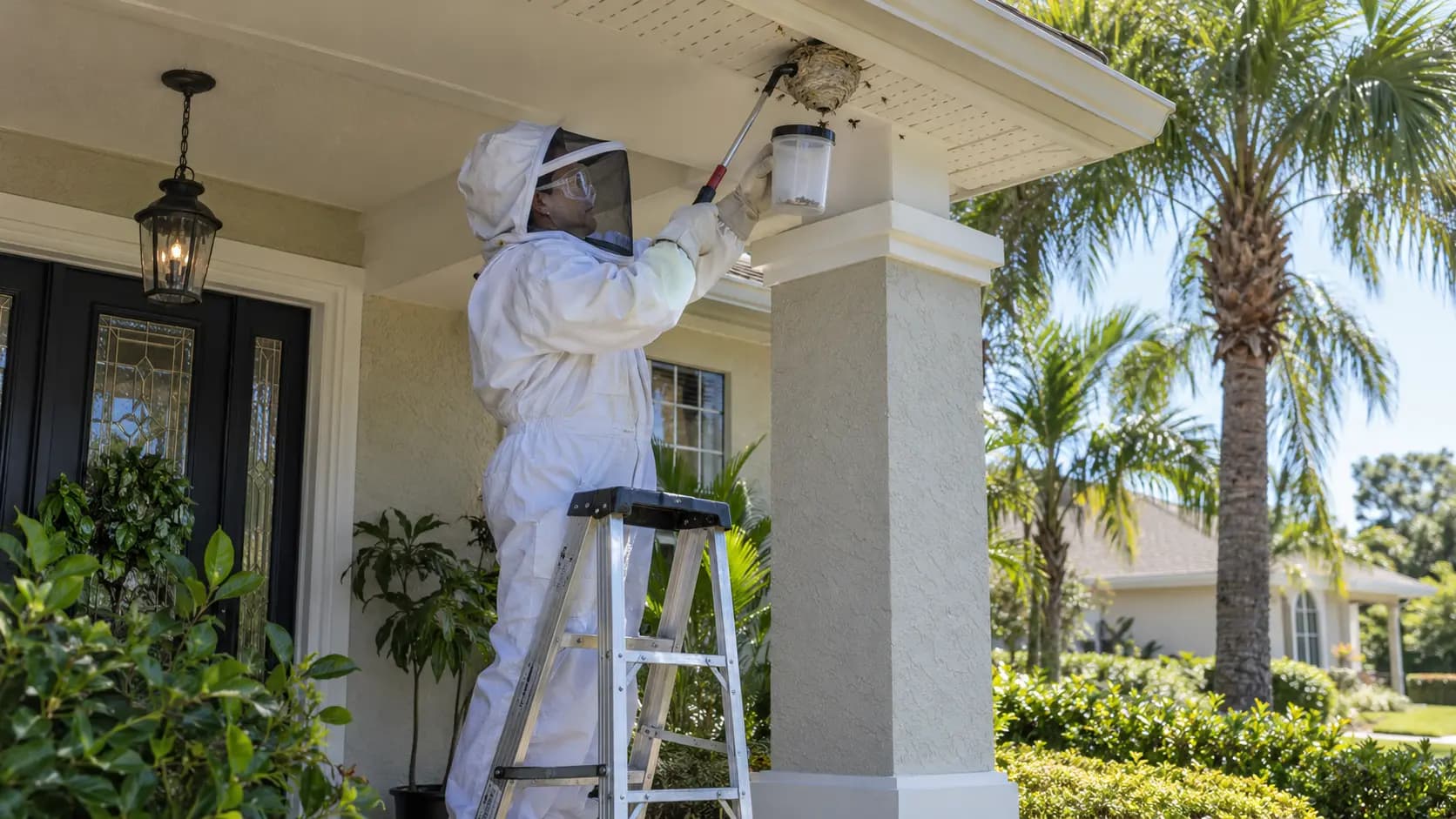
A wasp nest by the front door or a cloud of yellow jackets near the lawn mower can make your own yard feel off limits. Wasps and hornets are a normal part of Florida life, but nests close to where people walk, play, and swim need to go.
Wasp removal starts with identifying what's actually there, because paper wasps, hornets, yellow jackets, and mud daubers nest in different places and react differently when disturbed. The technician wears protective gear, treats and removes the nest, and looks for spots where new nests are likely to form.
Updated
Why Wasps and Hornets Are Common in Jacksonville
Jacksonville's long, warm season gives wasp colonies months to grow. Nests that start small in spring can be large and crowded by late summer and fall, which is when most people get stung. Covered porches, pool cages, soffits, shutters, and playsets all offer the sheltered spots wasps like.
Paper wasps build open, umbrella-shaped nests under eaves and railings. Yellow jackets often nest underground in lawns, old rodent holes, or landscape beds, and they get defensive when a mower shakes the ground. Hornets build large, enclosed paper nests in trees, shrubs, and under roof overhangs, and they guard them aggressively. Mud daubers build tube-shaped mud nests on walls and rarely sting.
Yellow jackets and hornets can also move into wall voids and attics through small gaps in siding or soffits, where a nest can keep growing out of sight until insects start showing up indoors.
Signs of a Wasp or Hornet Problem
Steady traffic to one spot
Insects flying back and forth to the same gap in siding, soffit, or the ground.
Papery nests under overhangs
Gray, honeycomb-looking nests under eaves, railings, shutters, and grill covers.
Football-shaped nests in trees or shrubs
Large, enclosed gray paper nests hanging from branches or eaves usually belong to hornets.
Holes in the lawn with insects coming out
Yellow jackets entering and leaving a small opening in the ground point to an underground nest.
Mud tubes on walls or ceilings
Rows of hardened mud tubes in garages, porches, and sheds are usually mud dauber nests.
How Wasp and Hornet Removal Works
Step 1: Identify the insect and nest
The technician confirms the species, finds every entrance, and checks the nest size before touching it.
Step 2: Plan for safety
People and pets stay inside, and the technician suits up in protective gear.
Step 3: Treat the nest
Wasp, hornet, and yellow jacket nests are treated directly. Ground nests are treated at the entrance.
Step 4: Remove the nest
Once activity stops, the nest is taken down so it doesn't attract other insects or get reused.
Step 5: Prevent repeat nesting
The technician points out gaps and favorite nesting spots where wasps tend to rebuild.
Wasp and Hornet Removal Options
Single nest removal
Suits one paper wasp, yellow jacket, or mud dauber nest in an easy-to-reach spot. The nest is treated, removed once activity stops, and the area is checked for others nearby.
Hornet nests in trees and high spots
Large hornet nests high in a tree or under a second-story eave call for extra protective gear and the right equipment to reach them safely.
Underground and wall-void nests
Yellow jacket nests in the ground or inside walls need treatment at the entrance and sometimes a return visit. Sealing the opening too early can push insects indoors, so timing matters.
Is Wasp and Hornet Removal Safe for Kids and Pets?
Yes, when a pro with protective gear does the work and everyone stays back. Disturbed nests can send insects flying, so keep children and pets inside during the job. Products used should be registered for wasps and hornets and applied as the label directs, mainly into the nest itself.
Please don't knock down a large nest or pour liquids into a ground nest yourself. Anyone with a known sting allergy should stay well away, and if someone has trouble breathing or swelling of the face or throat after a sting, call 911.
Tips to Discourage Wasps and Hornets
- Look under eaves and railings every few weeks in spring, since new nests are easiest to deal with while they're tiny.
- Seal gaps in soffits, siding, and around vents and pipes so yellow jackets and hornets can't get into walls.
- Keep trash cans closed and rinse out recycling, since yellow jackets go after sugary drinks and food scraps.
- Fill old rodent holes and bare spots in the lawn that yellow jackets could use for nests.
- Check grill covers, mailboxes, and playsets before using them, since wasps like these sheltered spots.
Wasp, Hornet & Yellow Jacket Removal for Businesses
A wasp nest over a store entrance or near a playground is a liability nobody wants. Wasp, hornet, and yellow jacket nests at storefronts, apartment communities, and other properties can often be handled around business hours. See how commercial pest control protects properties year-round.
Wasp, Hornet & Yellow Jacket Removal FAQ
See all residential pest control services →
One call · Local pros
Get Help With Wasp, Hornet & Yellow Jacket Removal Today
One call connects you with a local pest control pro who serves your area and can help you figure out the next step.
- Talk to a local pest control pro
- Describe the problem and ask your questions
- Set up a visit at a time that works for you