
Termite Control in Jacksonville, FL
Stop termites before they cause serious structural damage, with proven treatments and ongoing monitoring.
Your call connects you with an independent local pest control provider.
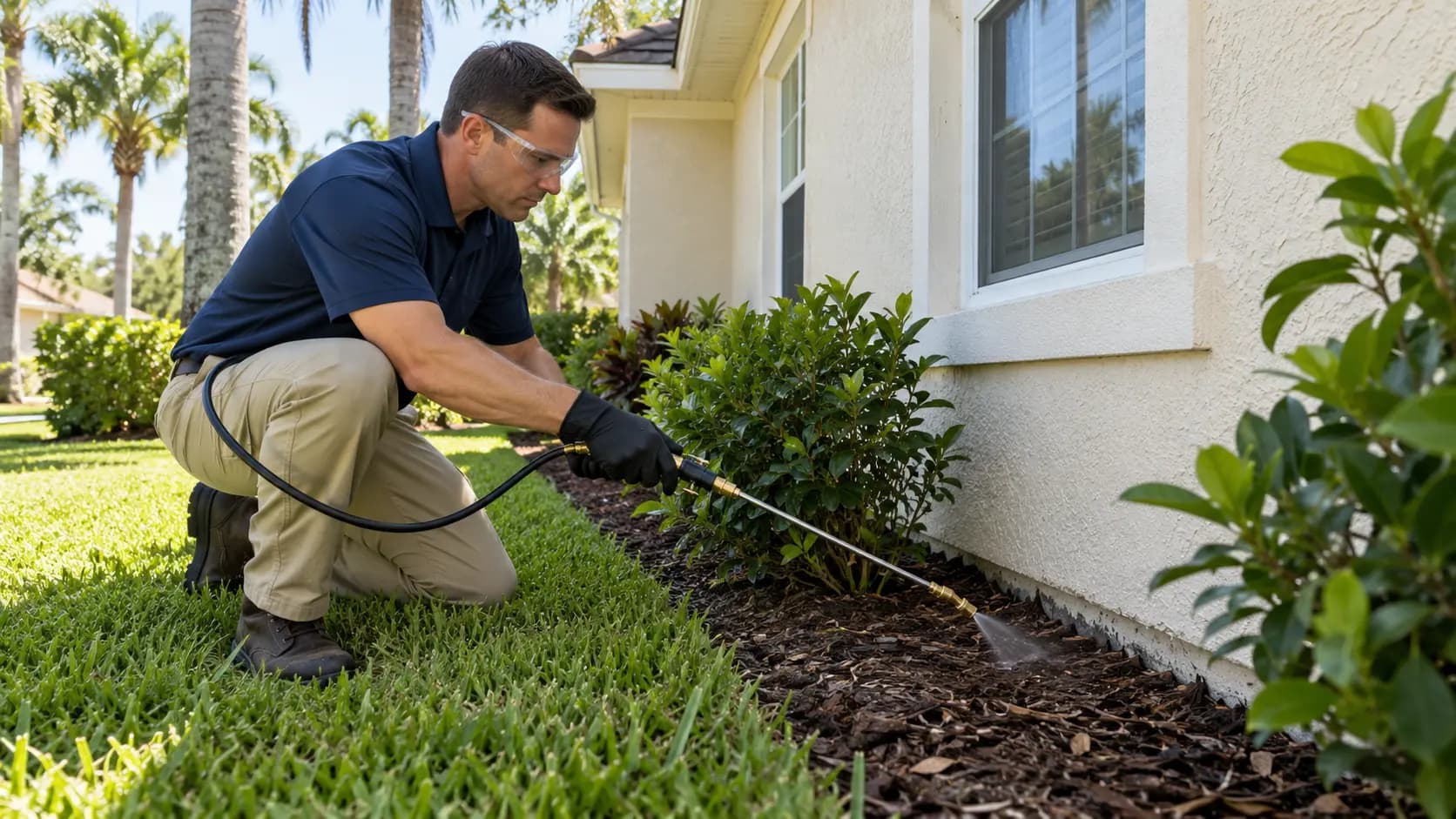
Termites are the one pest Jacksonville homeowners should never ignore. They feed quietly inside walls, floors, and framing, often for years before anyone notices, and most homeowner's insurance policies won't pay for the damage.
Termite control starts with a careful inspection to find out whether termites are active, which species you're dealing with, and how they're getting in. Then the technician recommends the treatment that fits your home, whether that's a liquid soil barrier, a bait and monitoring system, or a combination. After treatment, ongoing monitoring with regular checks helps make sure a new colony never gets the chance to settle in unnoticed.
Updated
Why Termites Are Such a Problem in Jacksonville
Northeast Florida sits in one of the most active termite regions in the country. Warm temperatures, sandy soil, frequent rain, and high humidity give termites everything they need to thrive all year.
Two species do most of the damage here. Eastern subterranean termites live in the soil and build mud tubes to reach the wood in your home. Formosan termites, an invasive subterranean species now established in parts of Northeast Florida, form much larger colonies and can do serious damage faster. Both can slip through cracks in a slab, expansion joints, and plumbing gaps.
Every spring, during termite swarm season, mature colonies send out winged swarmers. Subterranean termites usually swarm on warm days after rain, while Formosan termites swarm on humid evenings around porch lights. Swarmers indoors usually mean a colony is already feeding nearby.
Signs You Have Termites
Mud tubes on foundation walls
Pencil-wide soil tunnels running up the slab, piers, or garage walls.
Swarmers or discarded wings
Winged insects inside, or small piles of identical wings on windowsills and near doors, especially after a spring rain.
Hollow-sounding or soft wood
Baseboards, door frames, or trim that sound papery when tapped or that a screwdriver pushes into easily.
Bubbling or uneven paint
Blistered paint or sagging wallpaper can mean termite moisture behind the surface.
Doors and windows that start sticking
Termite damage and moisture can warp frames so they no longer close smoothly.
Small holes with fine debris
Pin-sized holes in drywall or wood, sometimes with packed soil or tiny pellets nearby.
How Termite Treatment Works
Step 1: Detailed termite inspection
The technician checks the foundation, garage, bathrooms, attic access, and exterior for activity and damage.
Step 2: Identify the species
Subterranean, Formosan, and drywood termites need different approaches, so the species is confirmed first.
Step 3: Recommend a treatment plan
Your technician explains the options and recommends the one that fits your home.
Step 4: Treat your home
The treatment is applied carefully, following label directions and protecting your landscaping.
Step 5: Monitor and protect
Follow-up inspections confirm the colony is gone. Ask the provider about ongoing monitoring or a renewable protection plan.
Termite Treatment Options
No one termite treatment is right for every home. The right choice depends on the species, your home's construction, and your preferences. Here's an honest look at the main options.
Liquid soil treatment
A termiticide applied to the soil around the foundation creates a treated zone termites can't safely cross. It works quickly and suits active infestations.
Bait and monitoring stations
In-ground stations around the home are checked on a schedule. Termites share the bait with their colony, eliminating it over time with little disruption to your yard.
Spot and wood treatments
Targeted treatments applied directly into damaged or at-risk wood. Useful for small, localized problems or alongside a full treatment.
Tent fumigation for drywood termites
Drywood termites live inside the wood, not the soil. They're less common here, but a widespread drywood infestation may need whole-structure fumigation.
Is Termite Treatment Safe for Kids and Pets?
Yes, when it's done correctly. Termite treatments go where termites travel: into the soil around the foundation, inside bait stations, or directly into wood. They're not sprayed across your living space, so your family has very little contact with them.
Products should be registered for termite control and applied exactly as their labels require. Keep kids and pets away from the work area until the technician is finished, and mention any wells, ponds, or vegetable gardens near the foundation so the work can be planned around them.
How to Help Prevent Termites
- Fix leaky faucets, AC drain lines, and gutters so water doesn't pool near your foundation.
- Keep mulch, soil, and pine straw a few inches below your siding and away from wood.
- Store firewood, lumber, and cardboard off the ground and away from the house.
- Trim shrubs so air can flow between plants and your exterior walls.
- Don't let wood siding, fences, or trellises touch the soil.
- Schedule a yearly termite inspection, even if you haven't seen any signs.
Termite Control for Businesses
Termites don't only target homes. Apartment buildings, retail spaces, and other commercial properties benefit from inspections, treatments, and documented monitoring programs. Building something new? Read about pre-construction termite treatment.
Termite Control FAQ
See all residential pest control services →
One call · Local pros
Get Help With Termite Control Today
One call connects you with a local pest control pro who serves your area and can help you figure out the next step.
- Talk to a local pest control pro
- Describe the problem and ask your questions
- Set up a visit at a time that works for you