Lawn Pest Control in Jacksonville, FL
Find out what's really killing those brown patches, and stop the insects before they spread across your yard.
Your call connects you with an independent local pest control provider.
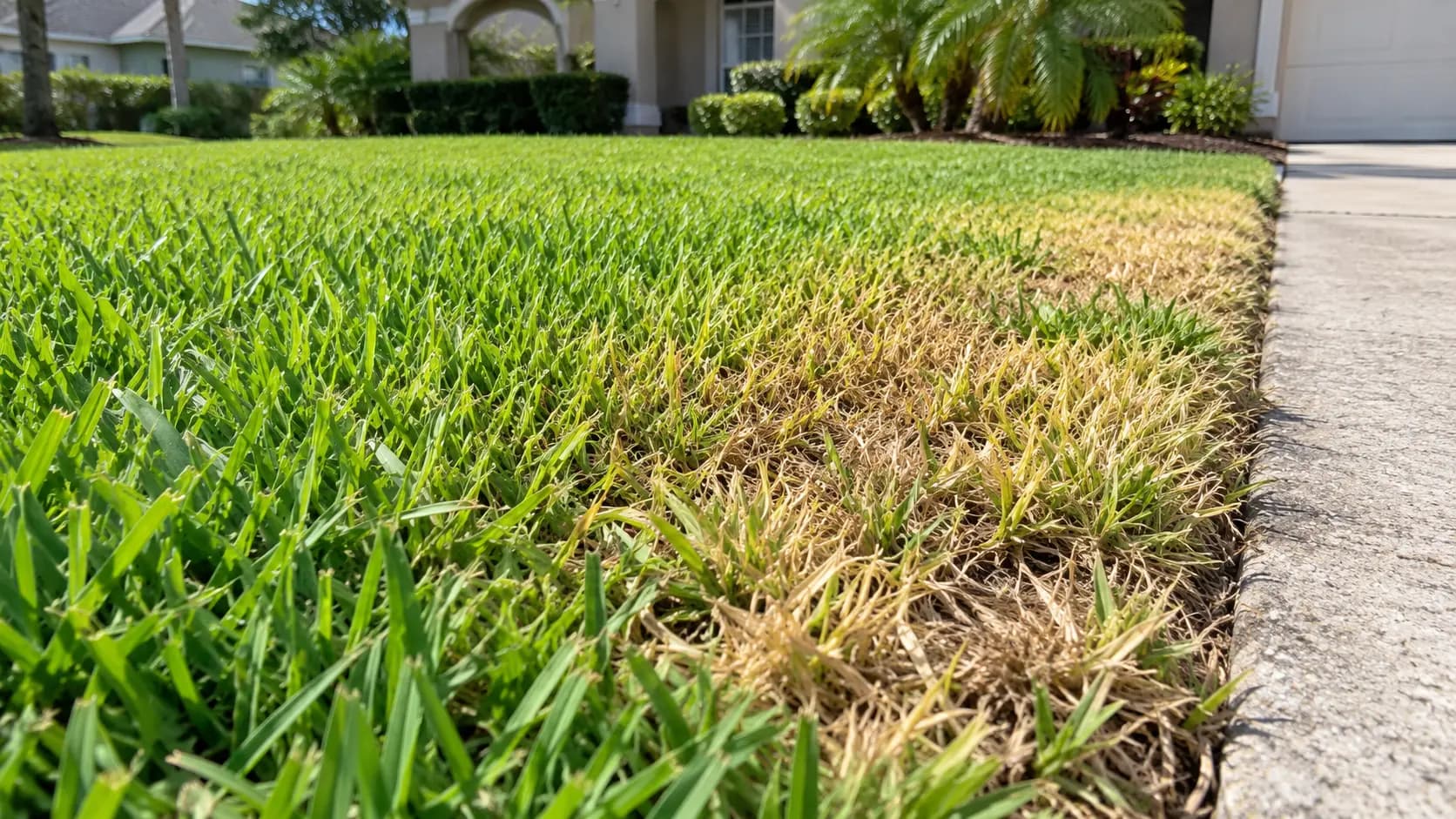
A yellow patch by the driveway that keeps growing, even though the sprinklers run on schedule, is one of the most common lawn complaints in a Jacksonville summer. That kind of damage is often caused by insects feeding on the grass, not a lack of water.
Lawn pest control finds the insect behind the damage and treats it directly. A local pest control pro looks for chinch bugs, sod webworms, mole crickets, grubs, and fire ants, then applies a targeted treatment to the areas that need it. The focus is pests, not fertilizing or weed control, so the work comes down to knowing how lawn insects behave in Northeast Florida.
Updated
Why Lawn Pests Hit Jacksonville Yards So Hard
St. Augustine grass covers most lawns in Jacksonville. It handles the area's heat and humidity well, but it's also the favorite food of the southern chinch bug, the most damaging lawn insect in the area.
Northeast Florida's long, warm growing season gives lawn pests many months to feed and breed. Chinch bugs build up fast in hot, dry spots along sidewalks and driveways. Sod webworm caterpillars chew grass blades at night, and mole crickets tunnel through the region's loose, sandy soil, cutting roots as they go.
Because damage often looks like drought or fungus, many homeowners water more and wait. By the time the real cause is found, a small patch can become a large dead area.
Signs of Lawn Pests
Yellow patches that turn brown
Spreading patches in hot, dry spots that don't recover after watering often point to chinch bugs.
Ragged or chewed grass blades
Notched, uneven blades and thin areas can mean sod webworms are feeding at night.
Small moths at dusk
Light-colored moths flying low over the grass in the evening may be laying webworm eggs.
Spongy soil and raised tunnels
Ground that feels soft underfoot, with small ridges, suggests mole crickets.
Turf that lifts like a rug
Dead grass that peels up easily with no roots attached is a classic grub sign.
Mounds after rain
Fluffy dirt mounds that pop up after storms are usually [fire ant colonies](/ant-control).
How Lawn Pest Treatment Works
Step 1: Walk the lawn
The technician checks damaged areas and the edges where healthy grass meets dying grass, where insects are easiest to find.
Step 2: Confirm the cause
The technician identifies the pest, or tells you if the problem looks like fungus, watering, or mowing instead.
Step 3: Treat the affected areas
A product labeled for that pest and for your grass type is applied, focusing on where the insects are active.
Step 4: Give you care tips
You learn how to water and mow after treatment to help the lawn recover.
Step 5: Follow up through the season
Return visits catch new activity, since many lawn pests come back in waves.
Lawn Pest Treatment Options
The treatment should match the pest and how far it has spread, so no more lawn is treated than needed.
Spot treatments
Targeted applications to active patches and a buffer around them. A good fit for chinch bugs caught early.
Full lawn treatments
Liquid or granular products applied across the turf when insects such as webworms or grubs are widespread.
Fire ant baits and mound treatments
Baits spread over the yard reach colonies you can't see, while mound treatments handle problem spots near walkways.
Seasonal lawn pest programs
Scheduled visits timed to when each pest is most active, with treatment only where activity is found.
Is Lawn Pest Treatment Safe for Kids and Pets?
It can be, when products are used exactly as the label directs. Keep children and pets off treated grass until liquid applications dry, or until granular products have been watered in. Your technician will tell you how long to wait.
Tell your technician about vegetable gardens, ponds, wells, or pets that dig, so the treatment can be planned around them.
How to Help Prevent Lawn Pests
- Keep your mower set high. St. Augustine that's cut too short gets stressed and attracts chinch bugs.
- Water deeply and less often, early in the morning, rather than a little every day.
- Don't overdo nitrogen fertilizer, which can feed lush growth that chinch bugs love.
- Check hot spots along driveways and sidewalks every week or two in summer.
- Remove heavy thatch so insects have fewer places to hide.
- Look for new mounds after rain and treat them early.
Lawn Pest Control for Businesses
HOAs, apartment communities, and office parks can also have common areas treated, since fire ants near walkways and dead turf by entrances are hard to ignore. Learn more about commercial services.
Lawn Pest Control FAQ
See all residential pest control services →
One call · Local pros
Get Help With Lawn Pest Control Today
One call connects you with a local pest control pro who serves your area and can help you figure out the next step.
- Talk to a local pest control pro
- Describe the problem and ask your questions
- Set up a visit at a time that works for you