Flea & Tick Control in Jacksonville, FL
Break the flea cycle in your home and yard, so your pets and your family can get back to normal.
Your call connects you with an independent local pest control provider.
If your dog won't stop scratching or you're finding itchy bites around your ankles, fleas have probably moved in. Ticks are a quieter problem, but they turn up on pets and people after time in shady yards and wooded edges.
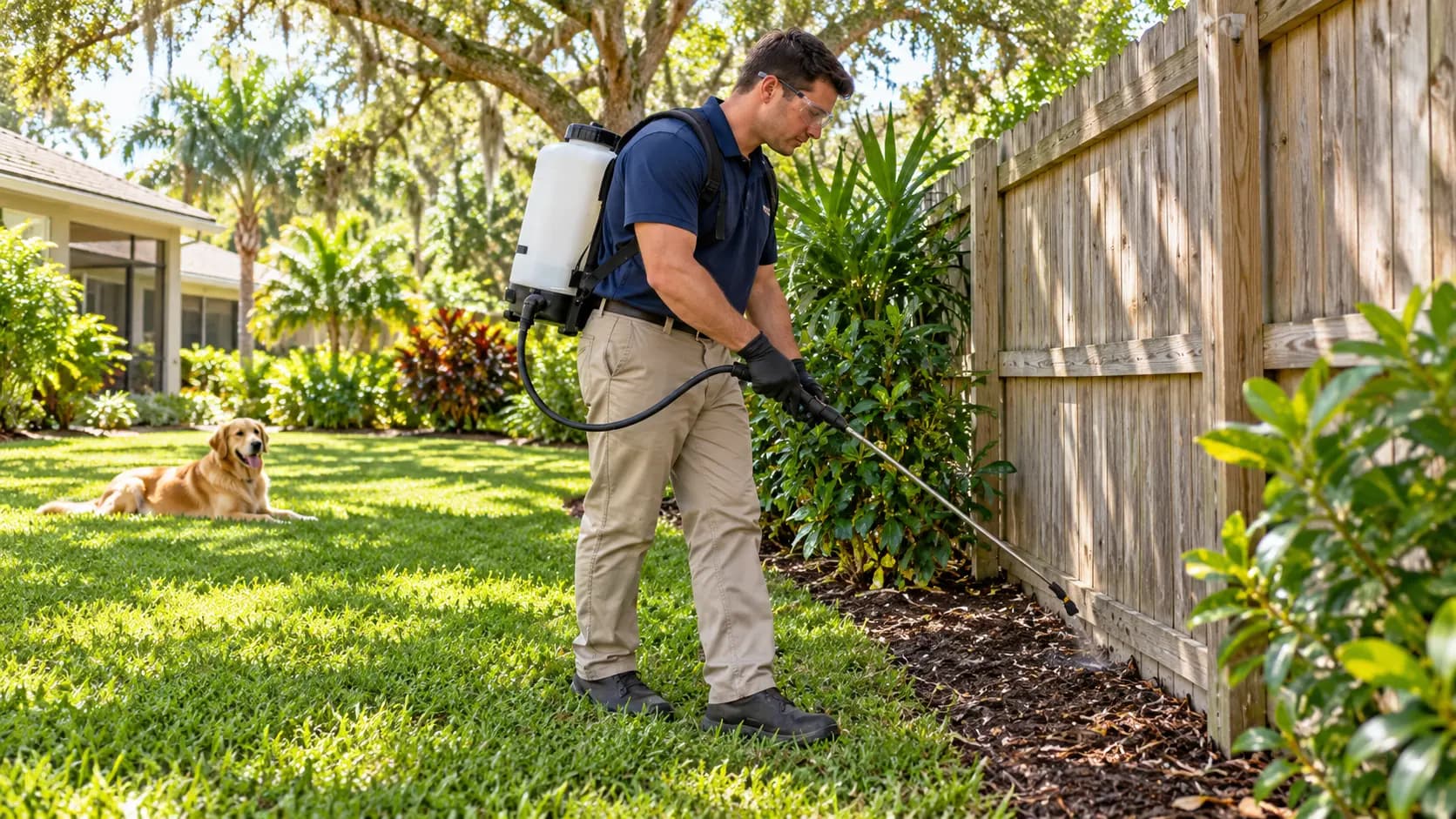
Flea and tick control treats the places pests live when they're not on your pet: carpets, furniture, pet bedding, and the shaded parts of your yard. Pest control technicians don't treat animals. Instead, the visit is timed with the flea and tick product your veterinarian recommends, so the home, yard, and pet are all covered at once. Hitting all three is what finally ends the cycle.
Updated
Why Fleas and Ticks Thrive in Jacksonville
In colder states, fleas and ticks slow down in winter. Here, warm temperatures and high humidity let them stay active most of the year, with the heaviest pressure from spring through fall. Shady yards, thick ground cover, and moist soil give flea larvae and ticks the damp spots they need.
Raccoons, opossums, squirrels, and stray cats carry fleas and ticks through Jacksonville neighborhoods and drop them in yards and under decks. Homes near wooded lots, creeks, and marsh edges tend to see more ticks.
Most of a flea problem isn't on the pet at all. Eggs fall into carpets and bedding and develop out of sight for weeks, so treating only the pet, or only the house, rarely works for long.
Signs of Fleas or Ticks
Pets scratching or chewing their skin
Constant scratching, especially around the neck, back, and base of the tail.
Flea dirt on pets or bedding
Tiny black specks that turn reddish when pressed on a damp paper towel.
Bites around ankles
Small, very itchy red bumps, often in clusters, after walking through carpeted rooms.
Jumping insects on carpets
Tiny dark-brown bugs that hop when disturbed. White socks make them easy to spot.
Ticks on pets after yard time
Small, flat or swollen bugs clinging near ears, between toes, or under the collar.
Fleas returning after a pet treatment
If fleas keep showing up despite a vet-recommended product, the home is likely the source.
How Flea and Tick Treatment Works
Step 1: Inspection inside and out
The technician finds where pets rest and where fleas and ticks are concentrated, from bedrooms to shady corners of the yard.
Step 2: Prep checklist and vet coordination
You get prep steps and schedule your pet's flea and tick treatment with your vet around the same time.
Step 3: Interior treatment
Carpets, rugs, furniture, and pet areas are treated, often with a growth regulator that stops young fleas from maturing.
Step 4: Yard treatment
Shaded areas, fence lines, under decks, and other spots where pets and wildlife spend time are treated.
Step 5: Follow-up visit
A return visit treats fleas that hatch from protected pupae after the first visit.
Flea and Tick Treatment Options
Most homes need both inside and outside treatment, but the balance depends on where the problem started and where your pets spend time.
Indoor treatment with growth regulators
Treating carpets, furniture, and pet areas kills adult fleas, while a growth regulator stops eggs and larvae from becoming biting adults. This is the core of most flea jobs.
Yard treatment
Focused on shade, ground cover, and resting spots rather than open sunny lawn, where fleas and ticks don't survive as well. It cuts down on pests hitching a ride back inside.
Recurring yard program
For homes near woods or with heavy wildlife traffic, scheduled yard treatments during the warm months can help keep ticks and fleas from building back up. Ask the provider whether a recurring program is available.
Is Flea and Tick Treatment Safe for Kids and Pets?
Yes, when everyone follows the timing your technician gives you. Products should be registered for flea and tick control and applied according to the label. People and pets stay out of treated rooms and off the treated yard until everything has dried.
Pest control technicians don't apply products to your animals. That's your veterinarian's job. Cover or remove fish tanks and birdcages before the technician arrives, and mention any family members with health concerns.
Prep and Prevention Tips
- Before treatment, vacuum all carpets, rugs, and furniture, then empty the vacuum outside into a sealed trash bag.
- Wash pet bedding, throw blankets, and pillows in hot water and dry them on high heat.
- Keep your pets on a year-round flea and tick product recommended by your veterinarian.
- Keep grass mowed, rake leaves, and trim shrubs to let sunlight into shady spots.
- Block access under decks and sheds so raccoons, opossums, and strays can't bed down there.
- Keep vacuuming often for a few weeks after treatment to bring fleas out of hiding.
Flea & Tick Control FAQ
See all residential pest control services →
One call · Local pros
Get Help With Flea & Tick Control Today
One call connects you with a local pest control pro who serves your area and can help you figure out the next step.
- Talk to a local pest control pro
- Describe the problem and ask your questions
- Set up a visit at a time that works for you