Termite Inspection & WDO Reports in Jacksonville, FL
Know exactly what's going on inside the walls before you buy, sell, or renew your protection.
Your call connects you with an independent local pest control provider.
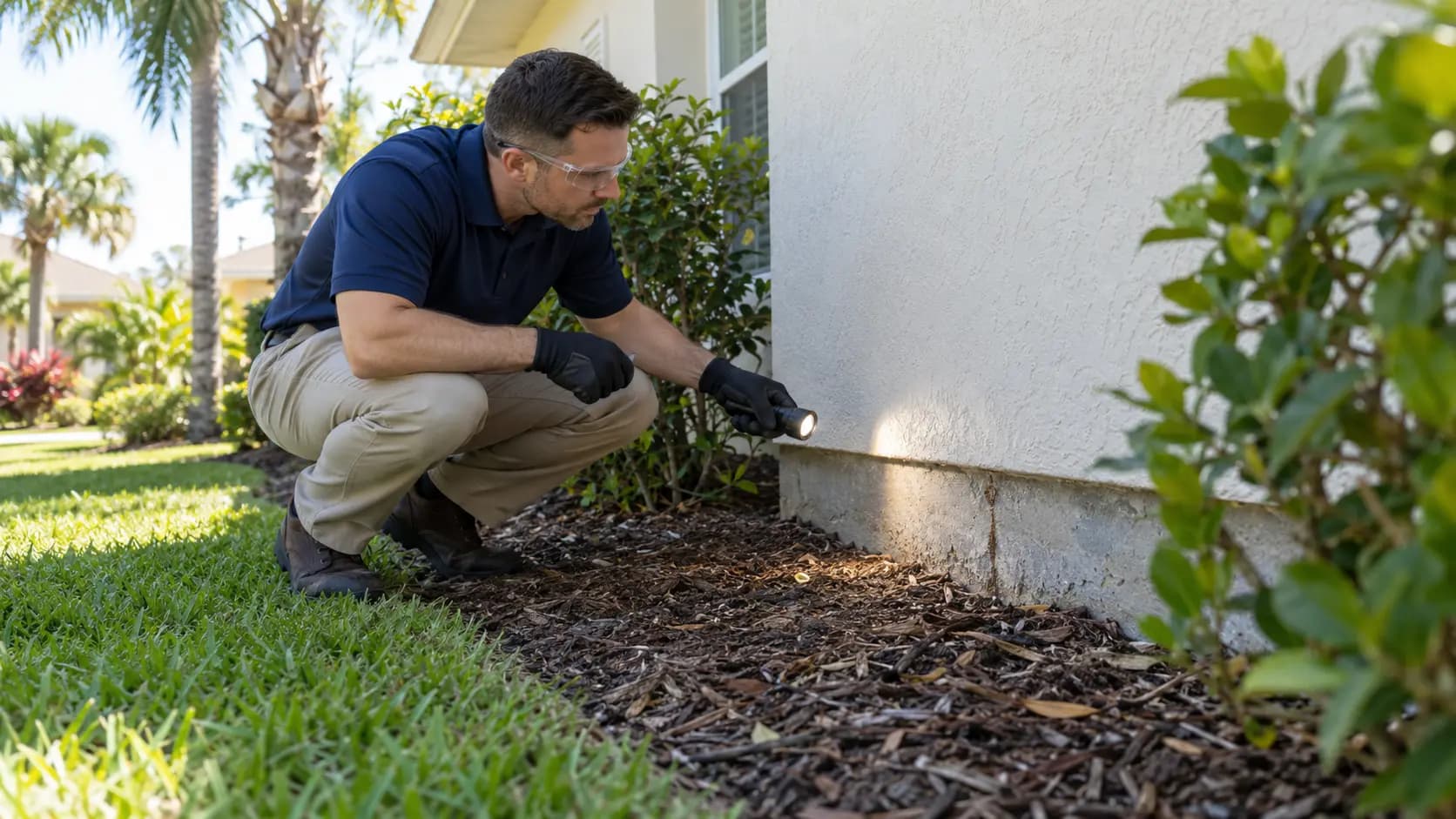
A termite inspection tells you whether termites or other wood-destroying organisms are active in a home, whether they've left damage behind, and whether the home has been treated before. In Florida, it's one of the most common checks in a real estate sale.
The inspector looks over the accessible areas of the home inside and out, then records the findings on the official Florida Wood-Destroying Organism (WDO) inspection report. A good inspector goes over the results with you in plain language. If a problem turns up, you'll know what it means and what your options are before you make any decisions.
Updated
Why Termite Inspections Matter So Much in Jacksonville
Northeast Florida's heat, humidity, and sandy soil make it a hard place for any home to stay termite-free. Subterranean termites are active here all year, and Formosan termites have moved into parts of the region. Damage often stays hidden behind drywall and under flooring.
Moisture adds to the risk. Wood-decay fungi and wood-boring beetles also count as wood-destroying organisms, and both do well in Northeast Florida's damp climate, especially in crawl spaces and older homes.
That's why buyers, lenders, and homeowners here rely on an inspection instead of guessing. It's a small step that can prevent unpleasant surprises after closing.
When You Need a WDO Inspection
You're buying a home
Buyers usually order a WDO inspection during the inspection period of the contract.
Your lender requires one
Depending on the loan type, many lenders ask for a clean WDO report before closing.
You're selling and want no surprises
A pre-listing inspection lets you fix issues before a buyer's inspector finds them.
You found mud tubes or wings
Signs of activity call for a closer look by an inspector.
It's time for your yearly check
Annual inspections are part of most termite protection plans and catch new activity early.
You're renovating or adding on
Opening walls or floors is a good time to confirm there's no hidden damage.
What a Termite Inspector Checks
Step 1: Exterior and foundation
The inspector walks the perimeter looking for mud tubes, damaged siding and trim, wood-to-soil contact, and moisture problems.
Step 2: Interior rooms
Baseboards, door and window frames, bathrooms, and kitchens are checked for damaged wood, frass, and discarded wings.
Step 3: Garage, attic, and crawl space
Where they can be safely reached, the inspector looks at framing, sill plates, and roof sheathing for activity or old damage.
Step 4: Signs of past treatment
Any drill holes, bait stations, or treatment stickers that show the home was treated before are noted.
Step 5: Report and walkthrough
The inspector completes the official Florida WDO report and explains each finding and any areas that couldn't be accessed.
Types of Termite Inspections
Not every inspection is for a real estate deal. Here's how they differ.
Real estate WDO inspection
A full inspection documented on the official Florida WDO report, ready to share with your agent, lender, and the other party.
Homeowner termite inspection
A check for peace of mind, after spotting signs, or before you choose a treatment. The inspector explains what was found and what it means.
Annual protection plan inspection
A yearly visit for homes on a termite plan to confirm protection is working and catch any new activity early.
Is a Termite Inspection Safe for Kids and Pets?
Yes. An inspection is a visual check. Inspectors typically use flashlights, moisture meters, and probing tools, and no products are applied during a standard WDO inspection.
The inspector does need clear access to the garage, attic hatch, under sinks, and any crawl space, so move stored items and secure pets before the visit. If treatment is needed later, ask about the safety steps for that service separately.
How to Prepare for Your Termite Inspection
- Clear a path to the attic hatch and any crawl space entrance.
- Move boxes and storage a few inches away from garage walls.
- Empty the space under kitchen and bathroom sinks if you can.
- Unlock gates, sheds, and any outbuildings that need to be checked.
- Have past termite treatment paperwork ready if you have it.
- Secure pets, or let the inspector know about them ahead of time.
Termite Inspection & WDO Reports for Businesses
Apartment buildings, offices, and other commercial properties can be inspected too, for owners, buyers, and property managers. See commercial pest control for ongoing programs.
Termite Inspection & WDO Reports FAQ
See all residential pest control services →
One call · Local pros
Get Help With Termite Inspection & WDO Reports Today
One call connects you with a local pest control pro who serves your area and can help you figure out the next step.
- Talk to a local pest control pro
- Describe the problem and ask your questions
- Set up a visit at a time that works for you