
Pre-Construction Termite Treatment in Jacksonville, FL
Protect a new build from the ground up, on your schedule, with the paperwork your inspector needs.
Your call connects you with an independent local pest control provider.
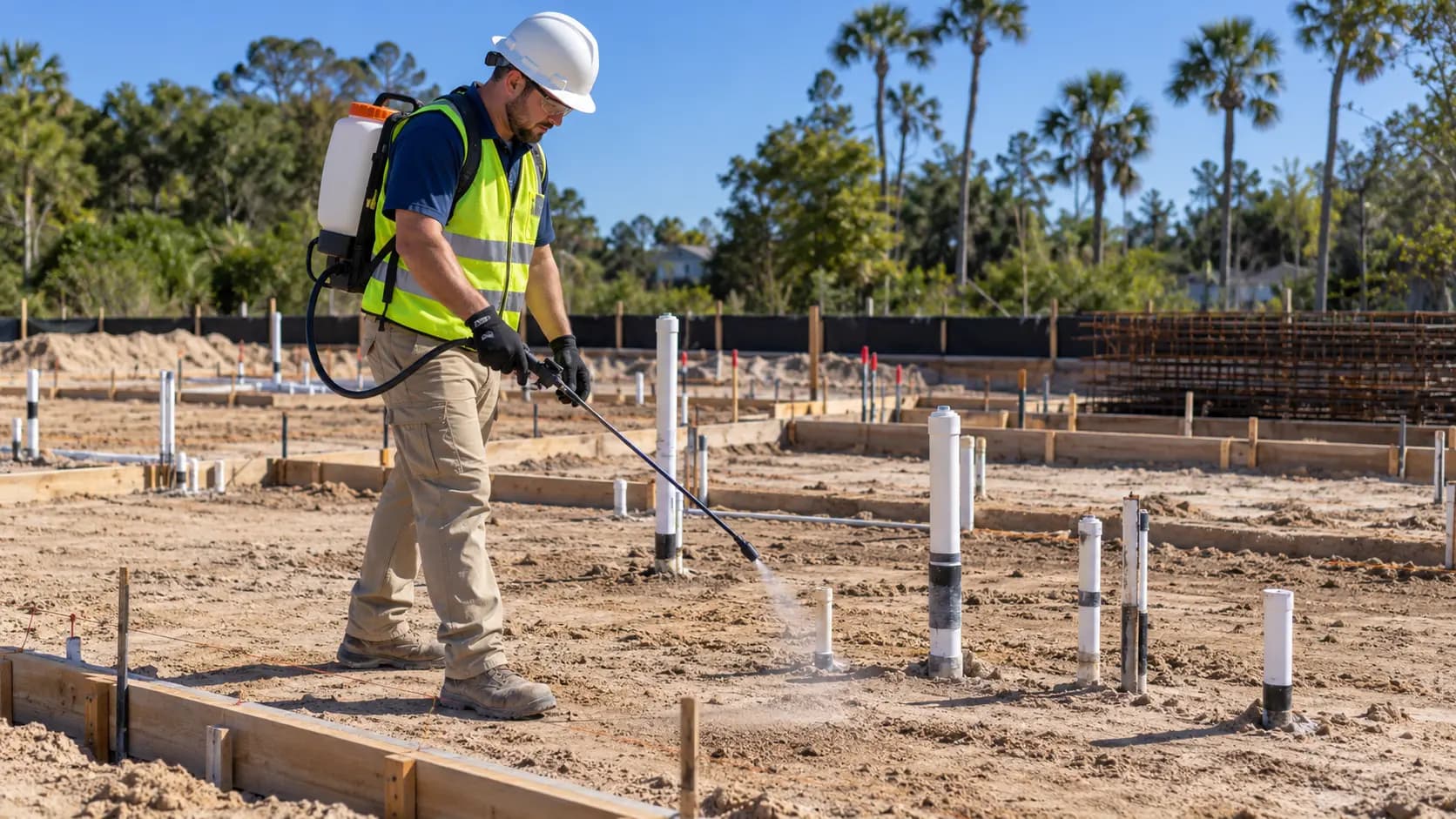
The easiest time to protect a building from termites is before it exists. Once the slab is poured, the soil under it is sealed off for good.
Pre-construction termite treatment applies a termiticide to the prepared soil before the concrete goes down, creating a treated zone under and around the foundation. Builders, general contractors, and homeowners building new homes across Northeast Florida arrange it as part of the build. The treatment is scheduled around your pour date, done at the right stage, and documented so you can show the building meets Florida's termite protection requirements. The result is a new structure that starts life protected instead of waiting for trouble to find it.
Updated
Why New Construction in Jacksonville Needs Termite Protection
Subterranean termites live in the soil across nearly all of Northeast Florida. Clearing a lot doesn't remove them, and a new slab gives them a fresh target with cracks, plumbing gaps, and expansion joints to work through as the concrete cures and settles.
Because the risk is so high in Florida, the Florida Building Code requires termite protection for new construction. A building official will expect proof of treatment as part of the permit process. Pre-treating the soil is one of the most common ways builders meet that requirement.
Signs Your Build Needs Termite Pre-Treatment
You're pouring a new slab
New homes, additions, and slab-on-grade commercial buildings all need protection before the concrete goes in.
You're adding a room or garage
Additions are new construction too, and the new foundation should be treated before it's poured.
Your lot was wooded
Buried roots and stumps left after clearing can feed termite colonies right where you're building.
Your permit calls for termite protection
Your plans and inspections will require proof the structure is protected.
You want protection that's hard to add later
Treating soil under an existing slab means drilling through concrete, so doing it now is simpler.
How Pre-Construction Treatment Works
Step 1: Plan the timing
The provider reviews the site plan and pour schedule with the builder or homeowner and agrees on a treatment window.
Step 2: Site readiness check
Soil should be graded and compacted, with plumbing roughed in, before treatment and before the vapor barrier goes down.
Step 3: Horizontal soil treatment
The soil under the full slab area is treated, with close attention to plumbing penetrations and areas around footings.
Step 4: Perimeter treatment
After final grading, the soil along the outside of the foundation is treated to finish the protected zone.
Step 5: Certificate of compliance
A certificate showing the treatment was completed is provided for your building inspector and project records.
Pre-Construction Protection Options
Builders have a few ways to meet termite protection requirements. A pest control provider can help you choose what fits the project.
Liquid soil pre-treatment
The most common choice. Termiticide is applied to the soil before the slab is poured, with a perimeter treatment after final grading.
Bait and monitoring system
Stations installed around the finished building and monitored over time. Some projects use baiting in place of a liquid pre-treat.
Borate wood treatment
A treatment applied to framing lumber during construction to make the wood itself less appealing to termites.
Is Pre-Construction Termite Treatment Safe for Kids and Pets?
Yes, with the right precautions. The treatment goes into the soil before the slab is poured, so it ends up sealed beneath the floor of the finished building, well away from living space.
Products registered for pre-construction termite control are applied according to their labels. On the job site, workers should stay off treated soil until it's ready, and the technician should give the builder clear guidance on when the next trades can return. Mention any nearby wells or water before treatment starts.
Tips for Builders and Homeowners Building New
- Call a pest control provider as soon as the pour date is set, not the day before, so a treatment window can be locked in.
- Remove stumps, roots, and wood scraps from the building site before grading.
- Keep the treated soil covered or undisturbed until the slab is poured.
- Don't bury lumber scraps or leftover wood in the backfill.
- Plan gutters and grading so water drains away from the new foundation.
- After moving in, keep mulch and soil below the slab edge and schedule a yearly termite inspection.
Pre-Construction Termite Treatment for Businesses
Home builders, general contractors, and commercial developers can arrange pre-treatments for single lots and multi-home projects. Call to talk through scheduling for your next build with a local provider, or visit the commercial services page.
Pre-Construction Termite Treatment FAQ
See all residential pest control services →
One call · Local pros
Get Help With Pre-Construction Termite Treatment Today
One call connects you with a local pest control pro who serves your area and can help you figure out the next step.
- Talk to a local pest control pro
- Describe the problem and ask your questions
- Set up a visit at a time that works for you