How to Get Rid of Fire Ants in Your Florida Lawn
Fire ant mounds popping up after every rain? Learn why quick fixes just move them, how baits and mound treatments work, and how to time treatment for real results.
5 min readUpdated
In this article
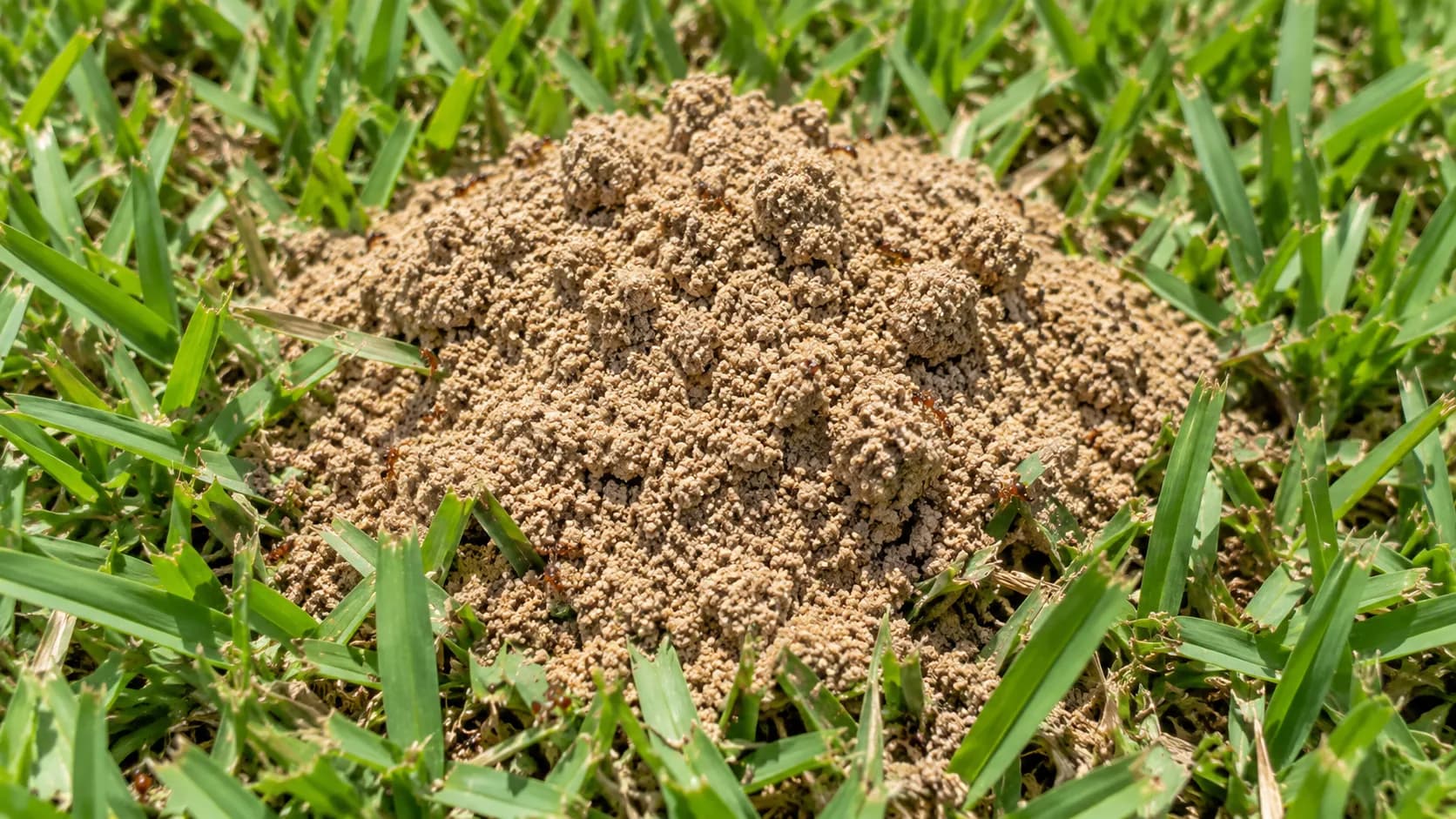
It happens almost every time Jacksonville gets a good soaking rain. The next morning, there are fresh mounds of fluffy dirt in the front yard, along the sidewalk, and right next to the kids' swing set. Walk through one by accident and you'll know about it fast.
Fire ants are one of the most common outdoor pests in Jacksonville, and they can be stubborn. The good news is that you can get them under control with the right method and good timing. Here's what works, what doesn't, and why.
Meet the Red Imported Fire Ant
The fire ants in Florida lawns are almost always red imported fire ants. They came to the Southeast from South America decades ago and now thrive in Northeast Florida's warm weather and sandy soil. The workers are small, reddish brown, and come in mixed sizes in the same mound.
Each colony has a queen, or sometimes several, living deep underground. The mound you see is only the top of a large network of tunnels. That's important, because anything that doesn't reach the queen won't stop the colony.
Why mounds show up after rain
When the soil gets soggy, fire ants move their brood up and build higher so the colony stays dry. That's why a yard that looked fine on Friday can have a dozen mounds by Sunday. The ants were there all along; the rain just made them visible.
Fire Ant Stings: What to Expect
Fire ants don't just bite. They grab on and sting, often many times, and a disturbed mound sends out a lot of ants at once. The sting burns right away, and a small white blister, or pustule, usually forms within a day.
Try not to scratch or pop the blisters, since broken skin can get infected. Washing the area with soap and water and using a cold compress can help with the discomfort.
Some people are allergic to fire ant venom. If someone has trouble breathing, swelling of the face or throat, dizziness, or a reaction that spreads well beyond the stings, get medical care right away. People who know they're allergic should talk with their doctor about a plan.
Why Kicking, Flooding, and Home Remedies Fall Short
It's tempting to grab the hose, a shovel, or a kettle of boiling water. The trouble is that most quick fixes only reach the top of the mound. The queen stays safe below, and the colony simply moves.
- Kicking or raking mounds stirs up the ants and often pushes the colony to build a new mound a few feet away.
- Flooding with water usually just sends the ants deeper or sideways for a while.
- Pouring boiling water can scald your grass and plants and is a burn risk for you, while often missing the queen.
- Gasoline or other household chemicals are dangerous, can harm the soil and groundwater, and should never be used on mounds.
- Spraying the surface kills the workers you see but leaves the rest of the colony to rebuild.
Fire Ant Treatments That Actually Work
Effective fire ant control focuses on the colony. There are two main tools, and many homeowners get the most reliable results by using both.
Broadcast baits
Fire ant bait is a granular product spread lightly over the whole lawn with a hand or push spreader. Foraging workers pick it up and carry it back to the colony, where it's shared with the queen. Bait works slowly, often over days or weeks, but it reaches colonies you can't see yet.
Individual mound treatments
Mound treatments are liquids, dusts, or granules applied directly to a single mound. They work faster and make sense for a mound by the front steps, a play area, or a spot where people walk every day. On their own, though, they won't touch colonies that haven't built a visible mound.
The two-step approach
The two-step method combines both. First you broadcast bait across the yard. Then, a few days later, you treat any mounds that are still active, especially in high-traffic spots. Done a couple of times a year, this approach tends to keep fire ant numbers low across the whole lawn.
Whatever you use, read and follow the product label. It tells you how much to apply, where it can go, and how long to keep people and pets away.
Timing Makes a Big Difference
Bait only works when the ants are out collecting food. Fire ants forage most when the ground is warm but not baking hot, so late afternoon or early evening on a mild day is usually a good choice. To check, set a small bit of oily food, like a potato chip, near a mound and see if ants find it within half an hour.
Apply bait to dry grass when no rain is expected for at least a day. Rain or sprinklers can ruin bait before the ants pick it up, so turn off irrigation for a bit after you spread it. Fresh bait matters too, since old, opened bags can go stale and lose their appeal to ants.
St. Augustine Lawns, Pets, and Kids
Most Jacksonville yards are covered in St. Augustine grass, and fire ants are happy to nest in it, especially in sunny areas and along driveways. Bait sits on top of the thatch where ants can find it, so there's no need to water it in. Fire ants aren't the only insects that damage these lawns, so if you also see brown or dying patches, it may be worth having a pro look into lawn pest control.
If you have children or pets, keep them inside or off the lawn while you spread products and for as long as the label says. Store bags and containers where little hands and curious dogs can't reach them. Teach kids what a mound looks like so they know to walk around it.
When to Call a Pro
If mounds keep coming back, if your yard is large, or if someone in your home is allergic to stings, professional help can save you a lot of trouble. A technician can spot colonies early, choose the right product for your lawn, and set up a schedule that keeps new colonies from settling in.
Professional fire ant and ant control treats the yard as a whole, from the front walk to the back fence. That matters across the area, especially for families with big irrigated lawns in Ponte Vedra Beach, where fire ants can spread fast. If you're tired of dodging mounds, call to be connected with a local pest control pro.