Why Mosquitoes Are So Bad in Jacksonville (and What Helps)
Jacksonville's heat, rain, and water make it a mosquito magnet. Learn where they breed around your home, why the season runs so long, and which steps make a real difference.
5 min readUpdated
In this article
You step onto the back porch with a cup of coffee, and within a minute something is biting your ankle. By the time you sit down, there are three more. For a lot of families in Northeast Florida, that's just what summer feels like.
Mosquitoes in Jacksonville aren't your imagination, and they aren't bad luck. The area's weather and landscape give them almost everything they need. The upside is that much of the problem starts close to home, which means there's plenty you can do about it.
Why Jacksonville Is Mosquito Country
Mosquitoes need three things: warmth, moisture, and a place for their eggs to sit in still water. Northeast Florida offers all three for a large part of the year.
A long warm season
Mosquitoes slow down when it gets cold, but Jacksonville's cool spells tend to be short. Warm weather usually returns in early spring and hangs on well into fall, so the biting season here stretches far longer than it does up north. A mild week in winter can even bring a few back out.
Humidity and summer storms
Damp air keeps adult mosquitoes from drying out, so they live longer and bite more. Then there's the rainy season, which runs roughly from late spring through early fall. Those almost-daily afternoon storms refill every low spot and container in the yard, and each refill can start a new batch of larvae.
Water everywhere you look
The St. Johns River, tidal creeks, salt marshes, and the retention ponds behind many subdivisions all hold water that some mosquito species love. If you live near the marsh, as many families in Fernandina Beach do, you may notice heavier bites at dawn and dusk.
The Mosquitoes Biting You May Be Coming From Your Own Yard
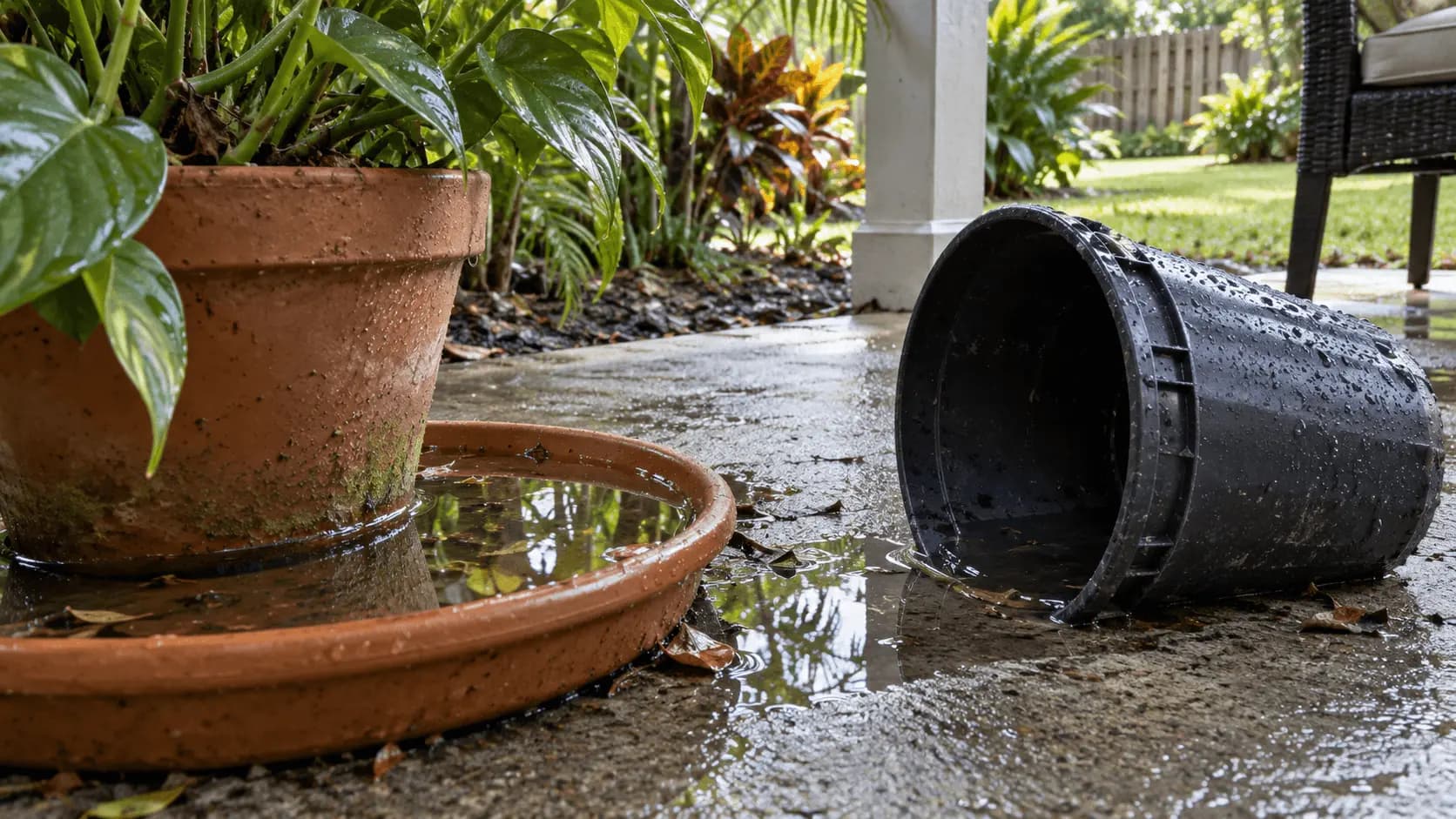
Rivers and marshes get the blame, but the mosquitoes that bother you on the patio often hatch just a few steps away. Some common backyard species can lay eggs in a surprisingly tiny amount of water. A bottle cap's worth is enough.
These container breeders also tend to stay close to where they hatched. So if your yard has a few hidden water sources, you may be raising your own supply. Look around for spots like these:
- Saucers under potted plants and hanging baskets
- Clogged gutters and sagging downspout extensions
- Buckets, watering cans, and kids' toys left in the grass
- Folds in tarps covering boats, grills, or firewood
- Birdbaths, pet water bowls, and decorative pots without drain holes
- Bromeliads and other plants that hold water where the leaves meet
- Old tires, recycling bins, and wheelbarrows stored upright
Why You Get Bitten in the Middle of the Day
Many people think mosquitoes only come out at dusk. Some species do prefer evening and early morning, but others are perfectly happy to bite in broad daylight, especially in shady spots.
That's why you might get bitten while weeding under an oak tree at noon or sitting on a covered porch. Between bites, adult mosquitoes rest in cool, sheltered places like thick shrubs, ground cover, and the underside of a deck. Those resting spots matter just as much as the water when it comes to control.
Make "Tip and Toss" a Weekly Habit
The single most useful thing you can do is simple: empty anything holding water, and throw away anything that doesn't need to be there. Many people call it "tip and toss." In summer heat, the trip from egg to flying adult can take only a week or so, which is why a weekly walk around the yard breaks that cycle.
- Pick one day a week, and do a second walk after any big storm.
- Turn over or store buckets, toys, and wheelbarrows so they can't collect rain.
- Rinse birdbaths and refill pet bowls with fresh water every few days.
- Clear leaves from gutters so water flows out instead of pooling.
- Drill small holes in the bottom of tire swings, bins, and pots that sit outside.
- Pull tarps tight, or prop them up so rain runs off.
Protecting Your Family and Pets
Mosquitoes are more than an itch. They can spread certain diseases to people, and they carry heartworm, which can seriously harm dogs. That's no reason to panic, but it is a good reason to take simple precautions.
- Use EPA-registered repellents, used as the label directs, when you'll be outside for a while.
- Wear light-colored long sleeves and pants during heavy mosquito times.
- Keep window and door screens in good repair, and close doors quickly.
- Run a fan on the porch. Mosquitoes are weak fliers and struggle in a steady breeze.
- Ask your vet about heartworm prevention for your dog.
- Follow advice from your doctor and local health officials, especially if they issue a mosquito alert.
When a Yard Treatment Makes Sense
Good habits go a long way, but they can only do so much on a big, shady lot or a yard that backs up to a pond or creek. That's where professional mosquito control for your yard helps.
A typical program pairs two approaches. A barrier treatment goes on the shrubs, fence lines, and shaded areas where adults rest during the day. A larvicide goes into water that can't be dumped out, like a drain or ornamental feature, so larvae there never become biters. Because treatments wear off and new mosquitoes keep arriving after rain, regular visits through the warm season work far better than a single spray.
No service can clear every mosquito from a neighborhood, especially near open water. What most families notice is that the patio, pool deck, and play area become comfortable to use again.
What About the County's Mosquito Program?
Duval County runs a public mosquito control program that works on mosquitoes across the community. That effort covers a large area, though, and it can't reach the flowerpot behind your garage or the clogged gutter over your back door.
Think of it as teamwork. Public programs handle the big picture, and what happens on your own property is up to you. Families from Mandarin to Fleming Island see the biggest difference when they combine tip-and-toss habits with treatment where it's needed. If you'd like a technician to walk your yard and point out breeding spots, call to be connected with a local pest control pro.