Signs of Rats in Your Attic (and What to Do Next)
Hearing scratching overhead at night? Here are the signs of rats in your attic, how to tell them from other animals, and the safest next steps for your home.
5 min readUpdated
In this article
It usually starts after the house goes quiet. You're lying in bed and hear a light patter across the ceiling, then a pause, then a quick scramble toward the wall. In the morning everything seems normal, so you wonder if you imagined it.
Most of the time, you didn't. When Jacksonville homeowners hear thumping overhead, rats turn out to be the culprit more often than anything else. Here's how to confirm what's up there, what to watch out for, and what to do about it.
Meet the Roof Rat: Florida's Attic Rat
When a Florida homeowner finds rats in the attic, it's almost always the roof rat. These slim, dark rats have long tails and are skilled climbers. They run along tree limbs, power lines, and fence tops the way a squirrel would, then squeeze through small gaps at the roofline.
Attics suit them well. They're dry, quiet, and warm, and the insulation makes good nesting material. Older neighborhoods with big oaks hanging over the roof, like many streets in Mandarin, give roof rats an easy bridge from the trees to your house.
8 Signs You Have Rats in Your Attic
Rats are shy and mostly active at night, so you'll usually find the evidence long before you see the animal. Watch for these signs:
Sounds and smells
- Night noises: scratching, scurrying, or gnawing in the ceiling or walls, usually starting after dark and quieting near sunrise.
- A musty, stale odor: a strong ammonia-like smell from urine can build up in the attic or near ceiling vents, especially in hot weather.
- Pets on alert: a dog or cat staring at the ceiling, following sounds along a wall, or whining at a closet door.
Things you can see
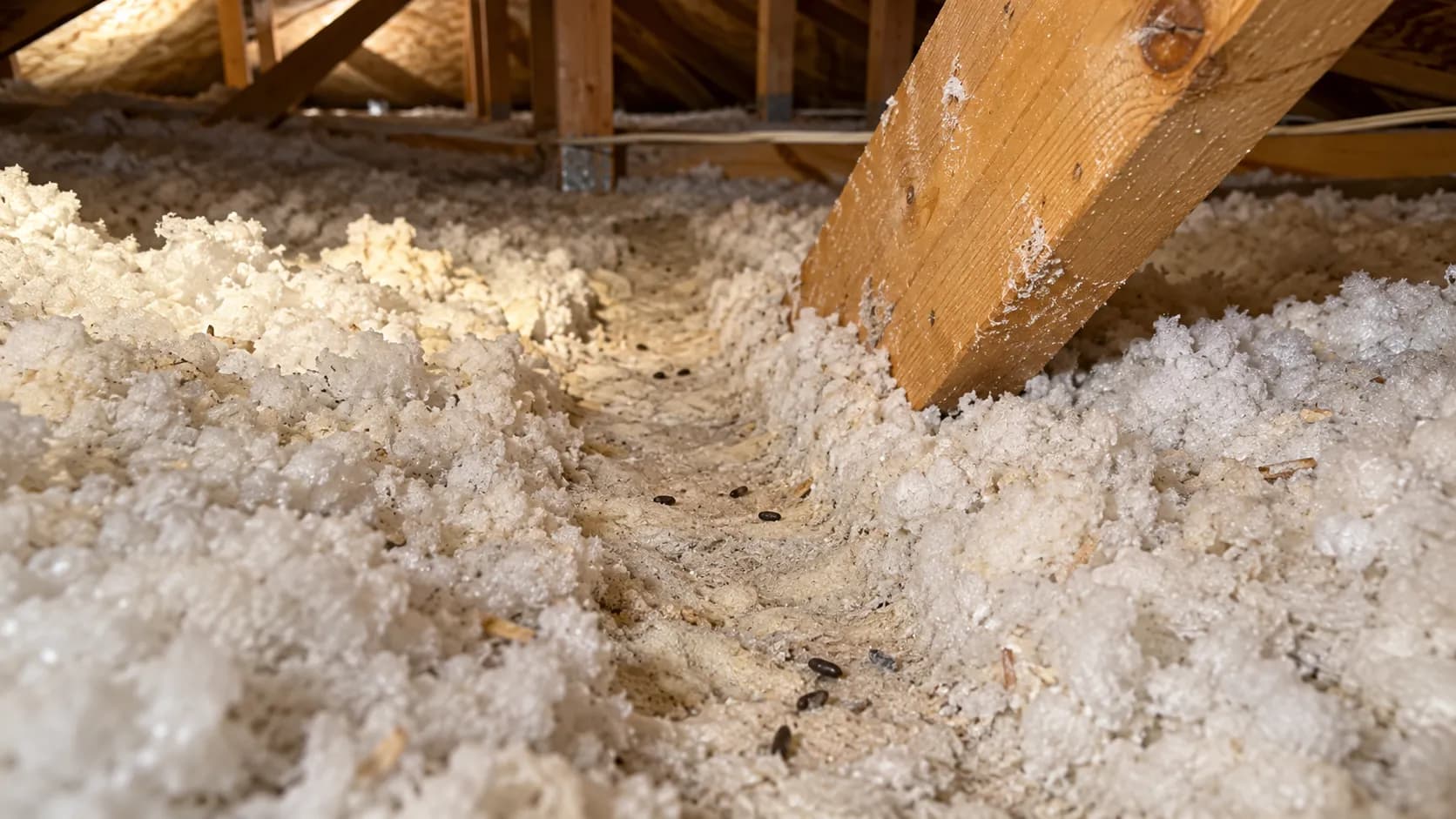
- Droppings: dark, narrow pellets with pointed ends, often around half an inch long. They often pile up along walls, near the attic hatch, or beside stored boxes.
- Grease and rub marks: dark smudges on rafters, pipes, and around holes, left by oily fur brushing the same route over and over.
- Gnawing: fresh chew marks on wires, wood, ductwork, PVC pipe, or stored items. New marks look lighter than the wood around them.
- Damaged insulation: flattened trails, tunnels, or torn patches where rats travel and dig.
- Nests: loose balls of shredded insulation, paper, or fabric tucked into corners or along the eaves.
Is It Rats, Mice, or Something Bigger?
Other animals can cause many of the same signs, so it helps to think about timing, size, and the type of damage.
- Mice make lighter, faster sounds, and their droppings are much smaller, closer to the size of a grain of rice. They may also show up in kitchen cabinets and pantries.
- Squirrels are busiest in the early morning and late afternoon, not in the middle of the night. They often chew larger, rounded holes in soffits or fascia boards.
- Raccoons are much heavier, so you'll hear thumping and walking rather than scurrying. They can tear off vent covers and shingles to get in.
- Opossums sometimes move into attics or crawl spaces, and they tend to leave a stronger, messier trail behind.
Why the difference matters
Rats and mice are handled with trapping and sealing, while larger animals need different tools and must be handled according to Florida wildlife rules. If the signs point to squirrels, raccoons, or opossums, look into humane wildlife removal instead.
Health and Safety: Be Careful Up There
Rodent droppings, urine, and nesting material can carry germs, and stirring them up creates dust you don't want to breathe. If you need to clean a small area before help arrives, take a few precautions:
- Open the attic or room to fresh air for a while before you start.
- Wear disposable gloves, and consider a well-fitting mask.
- Never sweep or vacuum droppings while they're dry.
- Soak the droppings and nesting material with a disinfectant, let it sit as the label directs, then wipe up with paper towels.
- Bag the waste, throw it out, and wash your hands well afterward.
Chewed wiring is worth taking seriously
Rats gnaw constantly to keep their teeth worn down, and electrical wires are a common target. Chewed insulation can expose bare wire, which may raise the risk of a short or an electrical fire. If you find damaged wiring, have a qualified electrician look at it.
What to Do Next (and What to Skip)
It's tempting to toss a box of poison into the attic and call it done. That approach usually backfires. A poisoned rat often crawls into a wall void or ceiling space to die, and the smell can linger for weeks while it draws flies. Poison also does nothing about the gap that let the rats in.
A plan that lasts has three parts working together:
- Trapping: traps placed along the runways in the attic remove the rats already inside, and you know exactly when you've caught one.
- Exclusion: every gap, vent, and opening along the roofline gets sealed with materials rats can't chew through, so new ones can't move in.
- Sanitation: cleaning up droppings and nesting material, and taking away outdoor food sources, so your home is less attractive.
Make Your Home Less Inviting From the Outside
What happens in the yard affects what ends up in the attic. A few changes make it harder for roof rats to reach your roof and less worth the effort once they do.
- Cut back tree limbs and palm fronds so they don't touch or hang over the roof.
- Thin out thick vines climbing walls, fences, or downspouts.
- Pick up fallen fruit and nuts, and keep pet food and birdseed in sealed containers.
- Check screens on gable vents, soffit vents, and roof vents for tears or loose edges.
When to Call a Professional
If you've heard noises for more than a night or two, found fresh droppings, or spotted chewed wires, it's time to get help. Finding every entry point means checking the roofline, vents, eaves, and spots where pipes and wires enter the house, and much of that work happens on a ladder or in a hot, cramped attic.
Professional rodent control covers the full job: inspection, trapping, sealing, and cleanup guidance. If you're not sure whether it's rats or another animal, call to be connected with a local pest control pro who can send a technician to take a look and explain what they find.