When Is Termite Swarm Season in Jacksonville?
Winged termites showing up around your windows? Here's when each type of termite swarms in Northeast Florida, how to tell them from flying ants, and what to do next.
4 min readUpdated
In this article
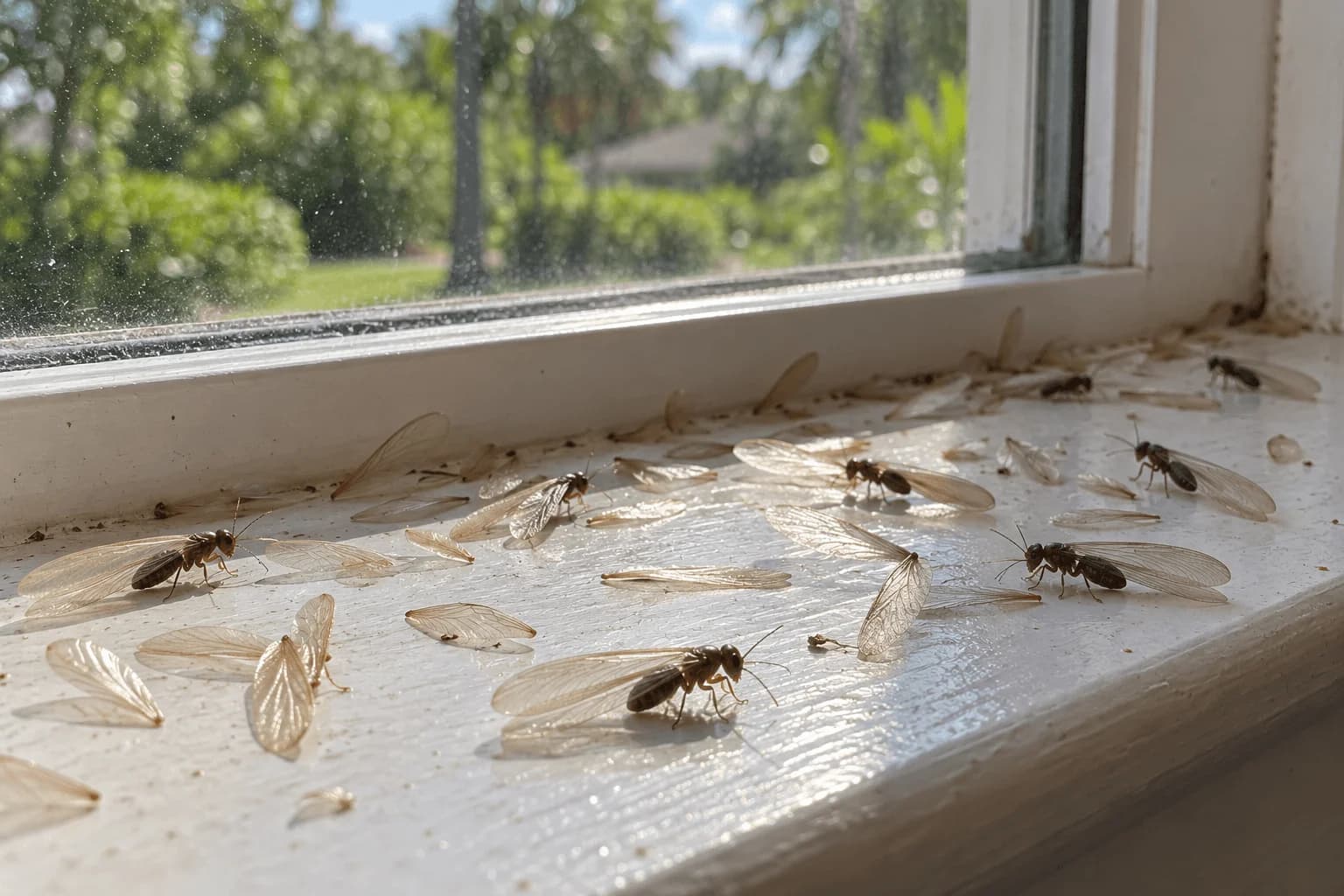
One warm spring afternoon, you notice dozens of small winged insects crawling on a windowsill. By evening, most of them are gone, and all that's left is a little pile of wings. If that sounds familiar, you've probably seen a termite swarm.
Swarms are one of the most common reasons Jacksonville homeowners call for termite help each year. The good news is that a swarm is a warning, not a disaster. Here's what's happening, when to expect it, and what to do if it happens in your home.
What Is a Termite Swarm?
A termite colony that has grown large enough sends out winged reproductive termites, called swarmers or alates, to start new colonies. On the right day, hundreds or even thousands of them leave the nest at once, fly a short distance, drop their wings, pair up, and try to find soil and wood to settle into.
Swarmers themselves don't eat your house. But a swarm tells you something important: a mature colony is close by. If the swarmers came out inside your home, the colony may already be feeding in your walls, floors, or foundation.
When Do Termites Swarm in Jacksonville?
In Northeast Florida, most swarms happen from late winter through late spring, but the exact timing depends on the type of termite. Warm temperatures, high humidity, and a recent rain are the usual triggers.
Eastern subterranean termites
These are the most common termites in Jacksonville. They usually swarm during the day, often in the morning, from about February through May. A warm, sunny day right after a rain shower is classic swarm weather.
Formosan subterranean termites
Formosan termites, an invasive species found in parts of Northeast Florida, tend to swarm a little later, usually in late spring. They come out around dusk on warm, humid evenings and are strongly drawn to porch lights, streetlights, and lit windows. Formosan swarms can be large, with clouds of insects around a single light.
Drywood termites
Drywood termites live inside wood rather than in the soil, and they're less common here than subterranean species. Their swarms are usually smaller and can happen at night during the warmer months. You may also notice tiny, hard pellets near wood they're infesting.
Flying Termites or Flying Ants?
Ants swarm too, and the two are easy to confuse. Before you worry, take a close look at a few of the insects or the wings they left behind.
- Waist: termites have a thick, straight body with no pinch. Ants have a narrow, pinched waist.
- Antennae: termite antennae are straight. Ant antennae bend like an elbow.
- Wings: termites have two pairs of wings that are the same length and much longer than the body. Ant front wings are noticeably longer than the back wings.
- Shed wings: termites drop their wings quickly, so piles of identical wings are a strong termite sign.
What to Do If Termites Swarm Inside Your Home
First, don't panic. A swarm doesn't mean your house is about to fall down. Termites work slowly, so you have time to make a good decision. Here's what to do:
- Collect a few swarmers or wings in a zip-top bag or on clear tape so a technician can identify them.
- Note where they came from: a window, a door frame, a bathroom, or a crack in the floor or wall.
- Vacuum up the rest. Swarmers die quickly indoors and can't start a colony inside your living space.
- Skip the bug spray. It kills the swarmers you can see but does nothing to the colony that sent them.
- Schedule a professional termite inspection to find the source and see whether there's damage.
What Happens During a Termite Inspection After a Swarm
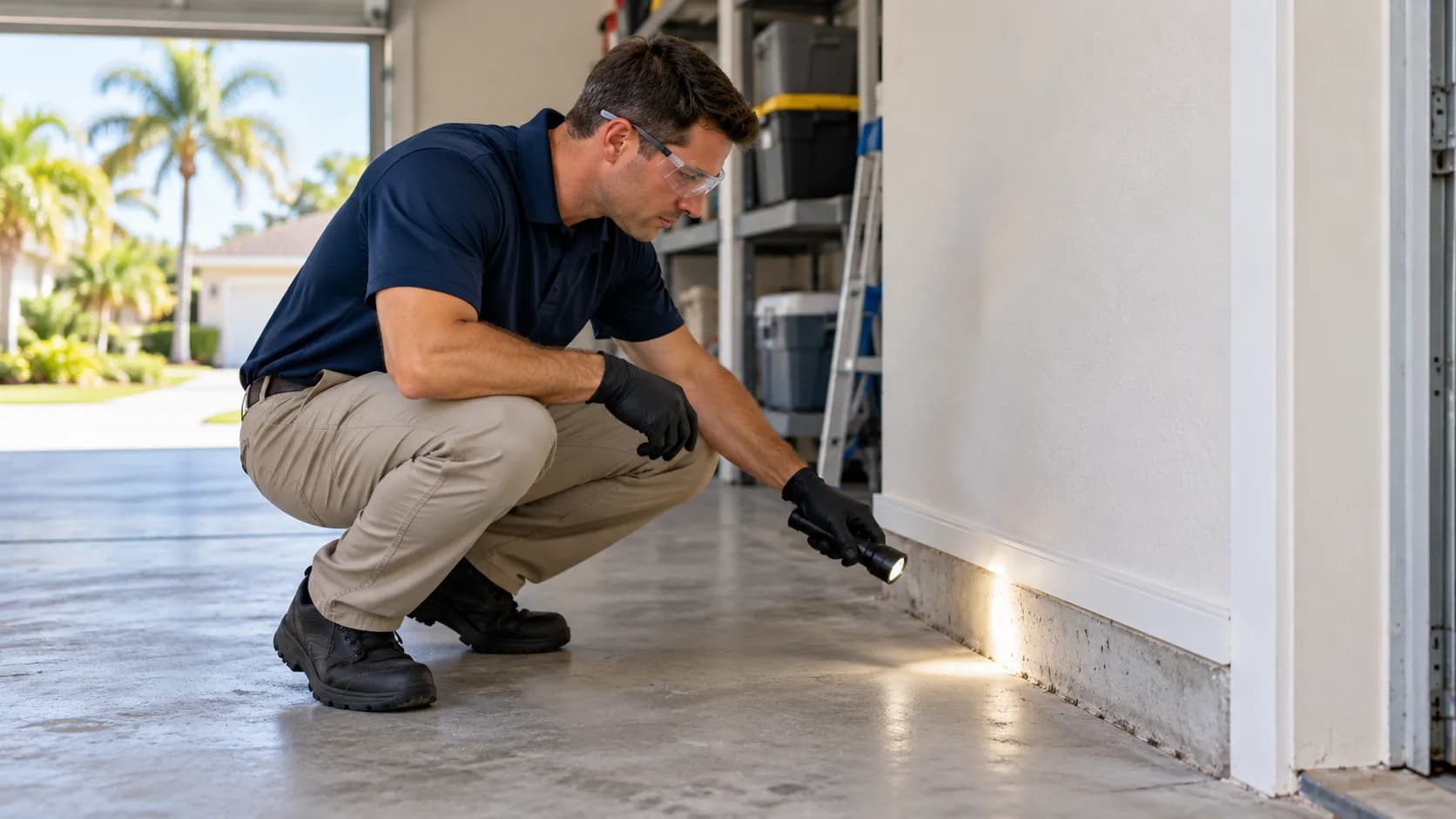
When a technician inspects after a swarm, they start with the spot where you found the swarmers and work outward. They'll look along baseboards, door and window frames, bathroom walls, and the garage, then head outside to check the foundation, slab edges, and any wood that touches the soil.
They're looking for mud tubes, damaged or hollow-sounding wood, moisture problems, and gaps where termites can get in. If you saved a few swarmers or wings, they'll identify the species, because subterranean, Formosan, and drywood termites each need a different plan.
Before leaving, they'll explain what they found in plain language and, if treatment is needed, walk you through the options. Local pest control pros inspect homes all over Jacksonville and the surrounding communities, and you can call to be connected with one.
What If the Swarm Is Outside?
Seeing swarmers in the yard, on a fence, or around a tree stump is less alarming. It tells you there's a colony in the area, which is common in Jacksonville. Still, it's a good reminder to check that your home's protection is up to date.
If your home hasn't had a termite inspection in the past year, or if it's been a while since your last termite treatment, now is a good time to get one scheduled.
How to Lower Your Risk Before Next Swarm Season
You can't stop termites from swarming, but you can make your home a much less inviting place for new colonies to settle.
- Fix leaky outdoor faucets, AC drain lines, and gutters that soak the soil next to your foundation.
- Keep mulch and soil a few inches below siding and away from door frames.
- Turn off unneeded outdoor lights on spring evenings, when Formosan swarmers are flying.
- Store firewood and lumber off the ground and away from the house.
- Keep a yearly termite inspection on the calendar, and ask about ongoing termite control protection.